

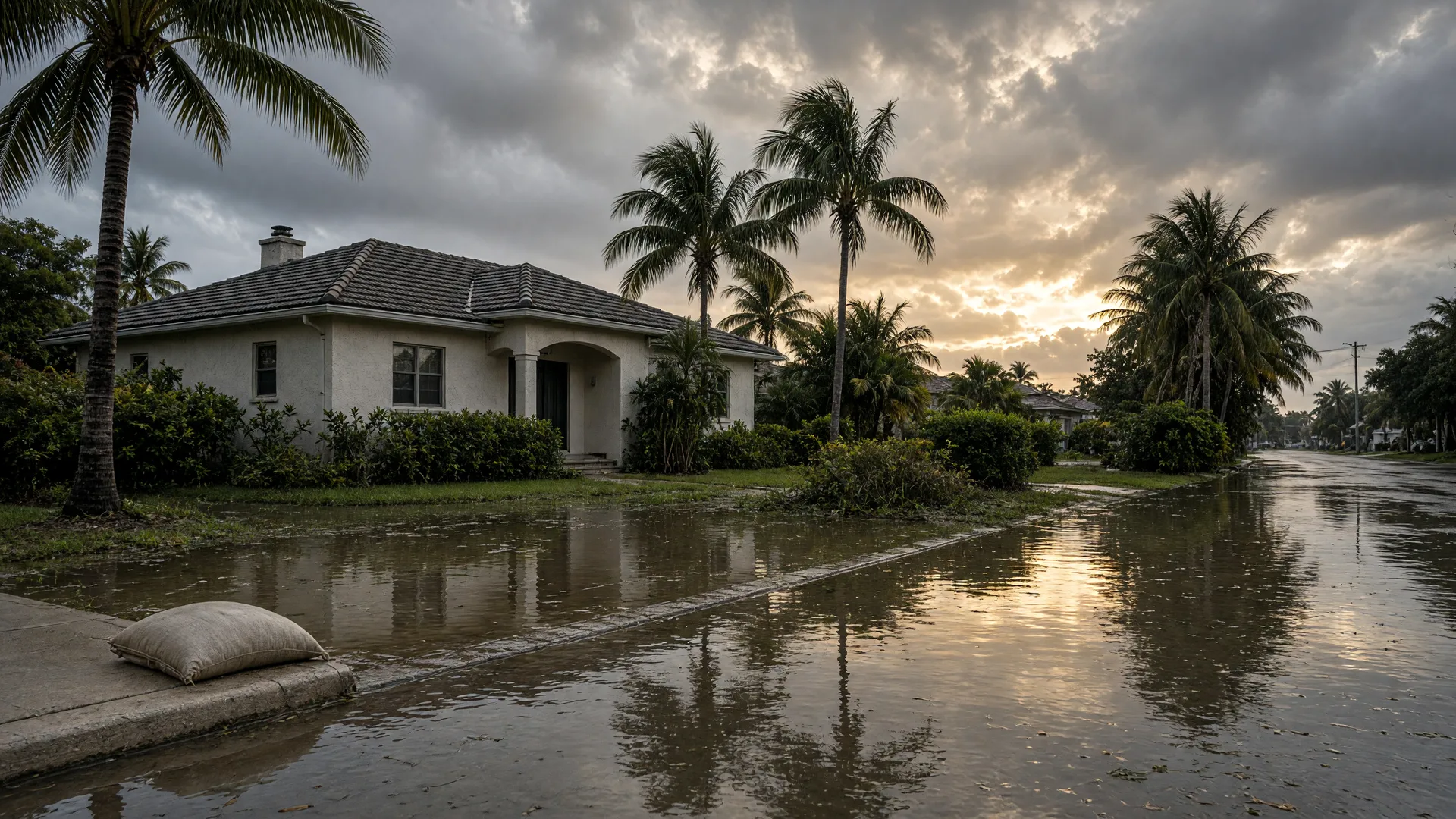
Flooding is part of the rhythm of life on Florida's east coast, and the difference between a stressful week and a manageable one usually comes down to preparation. This guide walks Space Coast and Indian River homeowners through flood zones, elevation certificates, insurance, and the exact local numbers to call, before, during, and after the water rises.
Know Your Flood Zone
The first step is knowing whether your home sits in a flood zone, and what that label actually means. FEMA divides flood risk into lettered zones. Zone A and Zone AE are Special Flood Hazard Areas, the places with a one percent annual chance of flooding, often called the 100-year floodplain. Zone AE comes with detailed mapping and a published Base Flood Elevation, while Zone A is mapped by approximation, so the expected flood height is not shown. Zone X covers moderate to low risk. If your home is in a high-risk zone and you carry a federally backed mortgage, flood insurance is generally required. Source: FEMA flood zone glossary
You can look up your parcel on the FEMA Flood Map Service Center, and your county's floodplain administrator can read the designation out loud in plain English. The address matters: two homes a street apart can sit in very different zones, and that affects both your insurance cost and how easily a home sells later.
The Elevation Certificate
An elevation certificate is an official FEMA document that records where your home's lowest floor sits in relation to the Base Flood Elevation. It is prepared, signed, and sealed by a licensed land surveyor, engineer, or architect, and it is one of the most useful documents a coastal homeowner can own. Source: FEMA FloodSmart on elevation certificates
You generally need one for an accurate flood insurance quote in a high-risk zone, and it can support a request for a Letter of Map Amendment if you believe your home is higher than the map suggests. In Florida, having one prepared typically costs a few hundred dollars, roughly $400 to $900 depending on the property. If you are buying, ask whether the seller has one on file. If you own, consider having one done before you shop insurance, because the premium difference can be significant.
Flood Insurance, Before You Need It
Standard homeowners policies do not cover flooding. Water from storm surge, heavy rain, or overflowing waterways is a separate risk, and it requires a separate flood policy through the National Flood Insurance Program, which FEMA administers and licensed private agents sell. Source: FloodSmart on flood coverage
NFIP building coverage protects the structure itself up to $250,000, and contents coverage protects your belongings up to $100,000, each with its own deductible. There is usually a 30-day waiting period before a new policy takes effect, which is why the standard advice is to buy well before hurricane season, not the day a storm forms. Even if you live outside a mapped flood zone, a policy is worth a conversation with your agent, because more than a third of flood claims come from properties in low- and moderate-risk areas.
Before the Storm
- Know your evacuation zone and your flood zone, and post both somewhere visible.
- Keep insurance documents, your elevation certificate, and your agent's number in a waterproof pouch.
- Walk through every room with your phone on video, narrating what you see, and store the video in the cloud.
- Sign up for alerts now. In Brevard County, text BREVARDEOC to 888777 for emergency text updates. Source: Brevard County Emergency Management
- In Indian River County, sign up for the free Alert Indian River system through the county's Get Connected page. Source: Indian River County Get Connected
- Clear gutters and drains, move patio furniture and loose items inside, and charge your devices.
- If your area is under a flood watch, park away from low spots and keep a go-bag by the door.
- Listen to local officials. If they say leave, leave. Stuff can be replaced; people cannot.
During Flooding
When water is rising, stay calm and stay informed. Never walk through moving floodwater, because even shallow water can hide hazards, and a foot of moving water is enough to lift a car. Turn around, don't drown is a saying that saves lives for a reason. Move to the highest floor or to higher ground, stay away from standing water near electrical outlets and appliances, and never drive through a flooded roadway. Follow the instructions of emergency management, and if you need non-emergency help in Brevard County, dial 2-1-1 for the disaster hotline.
After the Water Recedes
Do not re-enter your home until officials say it is safe. Watch for downed power lines, gas leaks, and displaced wildlife, and wear boots and gloves while you work. Photograph every room and every damaged item before you move or throw anything away; those pictures are the backbone of your claim.
- Dry out within 24 to 48 hours where you can, to slow mold growth.
- Separate damaged items in a visible spot for the adjuster.
- File your insurance claim as soon as you are able.
- If you need federal help, register with FEMA at DisasterAssistance.gov or call the FEMA Helpline. Source: DisasterAssistance.gov
- Dial 2-1-1 for local services, food, and shelter referrals in Brevard County.
Who to Call, Space Coast and Indian River
Save these verified numbers before you need them. They cover both counties plus the federal resources that step in after a major event.
For text alerts: in Brevard County, text BREVARDEOC to 888777. In Indian River County, sign up for Alert Indian River through the county's Get Connected page. Source: Alert Indian River
A Note for Buyers
If you are shopping for a home right now, flood risk belongs on your due-diligence list next to the roof and the air conditioner. Ask for the seller's elevation certificate, get a real flood insurance quote before you make an offer, and ask your agent to explain the zone in plain English. I do this in every search I run on the Space Coast, because a home that fits your life should never come with a surprise policy bill or an unexpected floodplain rule.
Whether you are preparing your current home or searching for your next one, I am one phone call away. Plan ahead, ask questions, and keep the good people's numbers in your phone.
About the Author

Written by
Bénédicte Obringer
With over 30 years of experience spanning luxury fashion, private banking, and real estate, Bénédicte brings a global perspective shaped by life in Paris, New York City, Palm Beach, and now the Space Coast. She specializes in serving buyers, sellers, and relocating clients throughout Central Florida as part of the FIG Team Powered by eXp Luxury.
Read MoreLet's Talk
Ready to Find a Home That Fits Your Life?
Whether you're buying, selling, or simply exploring, every conversation is confidential and without obligation.
Get in Touch